You spray a light mist on your skin, and suddenly you carry the scent of fresh wood or sweet flowers for hours. It feels like a simple magic trick, but it is actually a beautiful mix of chemistry and human biology. Many people wear their favorite scents every day without ever understanding what is perfume and how does it actually work on a physical level.
At its core, perfume is a blend of fragrant oils, alcohol, and water that evaporates slowly over time. This evaporation process releases tiny scent molecules into the air, which your nose then detects and your brain interprets. By looking closely at this process, you can learn to choose better scents and make them last much longer.
The Basic Chemistry of Your Favorite Scents
To understand the science of scent, we must look at what goes into the bottle. Perfume is not just a single liquid with a nice smell. Instead, it is a complex mixture of natural oils, synthetic molecules, and a carrier liquid.
The carrier liquid is usually high-grade alcohol mixed with a small amount of water. Alcohol is used because it dissolves the fragrant oils easily. It also evaporates very quickly when it touches your warm skin.
This rapid evaporation is important because it lifts the scent molecules into the air. Without alcohol, the oils would stay flat on your skin and would not travel to the noses of people around you. Many scientists have spent years studying what is perfume and how does it actually work under different conditions. You can read more about this process in the history of perfume chemistry.
The alcohol acts as a launchpad for the scent. Once you spray the mixture, the alcohol disappears within seconds. This leaves behind a thin layer of pure fragrant oils on your skin.
What is Perfume and How Does It Actually Work
To truly understand what is perfume and how does it actually work, we must look at how molecules move. Every scent you smell is made of tiny, lightweight molecules that float in the air. When you spray perfume, you are placing millions of these molecules onto your body.
Your body heat warms up these molecules. As they get warmer, they gain energy and start to move faster. This movement causes them to lift off your skin and turn into a gas.
This physical shift explains what is perfume and how does it actually work when you walk into a room. The molecules spread out through the air in a process called diffusion. People nearby inhale these floating molecules, which triggers their sense of smell.
Without body heat, this process would happen much too slowly. That is why perfume smells stronger when you are active or warm. The heat acts as an engine that drives the evaporation process forward.
Understanding what is perfume and how does it actually work also helps you see why scents change over time. Different molecules evaporate at different speeds. This brings us to the structure of the fragrance itself.
The Secret Ingredients Inside Every Bottle
Modern perfumery uses thousands of different ingredients to create unique smells. These ingredients generally fall into two categories, which are natural extracts and synthetic chemicals.
Natural ingredients come directly from plants and animals. Perfumers extract oils from flower petals, fruits, wood, roots, and resins using steam or pressure. These natural oils are highly complex and contain hundreds of individual chemical compounds.
Synthetic ingredients are created in laboratories by chemists. These lab-made molecules can mimic natural smells that are impossible to extract, like peach, coconut, or fresh rain. They also replace animal-derived ingredients to keep the process humane.
Using synthetic ingredients helps protect wild animals and plants from over-harvesting. It also allows perfumers to create entirely new smells that do not exist in nature. When we look at the chemistry of these ingredients, we get a better picture of what is perfume and how does it actually work.
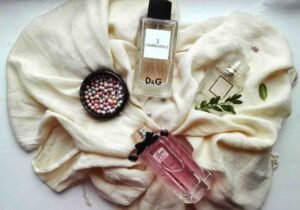
Both natural and synthetic ingredients are carefully tested for safety. Organizations like the International Fragrance Association set strict rules on what can go into your bottle. This ensures that the scents are safe for your skin and lungs.
How Perfumers Blend Different Notes
A great perfume is like a musical chord. It is made of different notes that blend together to create a harmonious sound. In perfumery, these notes are divided into three distinct layers based on how fast they evaporate.
Learning about these layers helps explain what is perfume and how does it actually work over a full day. The layers are known as top notes, heart notes, and base notes.
Top Notes Give the First Impression
Top notes are the very first smells you notice when you spray a perfume. These notes are made of small, light molecules that evaporate very quickly. Common top notes include citrus smells like lemon, lime, and bergamot, as well as light herbs.
These molecules only last on your skin for about five to fifteen minutes. They are designed to give an immediate burst of freshness. Still, they disappear quickly to make way for the next layer of the scent.
Heart Notes Form the Core Scent
Once the top notes fade, the heart notes begin to show. These are also called middle notes, and they form the main character of the fragrance. Heart notes are made of medium-sized molecules that do not evaporate as fast as top notes.
These notes usually consist of heavy florals like rose, jasmine, or lavender, as well as spices like cinnamon or nutmeg. They typically last on your skin for two to four hours. They act as a smooth bridge between the sharp top notes and the heavy base notes.
Base Notes Provide the Foundation
Base notes are the final layer of the perfume. They are made of large, heavy molecules that evaporate very slowly. These notes can last on your skin for eight hours, twelve hours, or even several days on clothing.
Common base notes include wood scents like cedar and sandalwood, sweet vanilla, patchouli, and musk. They give the perfume its depth and help slow down the evaporation of the lighter notes. Without base notes, the entire fragrance would disappear from your skin in under an hour.
Why Scents Smell Different on Everyone
Have you ever noticed that a perfume smells amazing on your friend but completely different on you? This is not an illusion. It is a result of your unique body chemistry reacting with the fragrance oils.
This personal chemistry is a major part of what is perfume and how does it actually work on different people. Several factors influence how a scent behaves once it touches your skin.
The Role of Skin Temperature and Moisture
Your skin type plays a huge role in how long a scent lasts and how it smells. Oily skin holds onto fragrance molecules much better than dry skin. The natural oils on your skin act as a binder, slowing down the evaporation process.
Dry skin lacks these natural oils, so the perfume evaporates much faster. If your skin is dry, the scent might disappear in just a few hours. Your skin temperature also matters because warmer skin speeds up evaporation, making the scent smell stronger but fade quicker.
How Your Diet and Hormones Change Scents
What you eat can actually change the way your perfume smells. Spicy foods, garlic, and onions can seep through your pores and mix with the fragrance oils. This alters the final scent profile in subtle ways.
Your hormone levels also affect your skin pH and temperature. This means your favorite perfume might smell slightly different during times of stress, illness, or hormonal shifts. Even your age and medication can play a role in this complex chemical reaction. This is a key part of what is perfume and how does it actually work when mixed with sweat.
The Science of How Your Nose Detects Fragrance
Once the perfume molecules evaporate into the air, your body has to detect them. This is where your olfactory system comes into play. It is a highly sensitive sensory system that connects your nose directly to your brain.
As you breathe in, the floating scent molecules travel up your nostrils. They land on a small patch of tissue called the olfactory epithelium, which is located high up in your nasal cavity. This tissue contains millions of specialized sensory cells.
These cells are covered in tiny hairs called olfactory receptors in the human nose. Each receptor is shaped to fit specific scent molecules, like a lock and key. When a molecule fits into a receptor, it sends an electrical signal to your brain.
Your brain then processes these signals to identify the smell. This incredibly fast system allows you to recognize thousands of different scents in an instant. By looking at the brain, we see another side of what is perfume and how does it actually work. As you explore what is perfume and how does it actually work, you realize how complex your nose really is.
How to Make Your Fragrance Last Much Longer
Many people complain that their expensive perfume fades too quickly. Fortunately, you can use the science of evaporation to make your scent last all day. It all comes down to where and how you apply it.
If you want to know what is perfume and how does it actually work to your advantage, you must learn where to spray it. You should always apply perfume to your pulse points. These are areas where your blood vessels are closest to the skin, such as your wrists, neck, and behind your ears.
These spots are naturally warmer than the rest of your body. The extra heat helps release the scent molecules slowly and steadily throughout the day. You can find more tips on scent molecules in the American Chemical Society guide on scent molecules.
Another great trick is to apply an unscented moisturizer to your skin before spraying your perfume. The lotion creates a barrier that traps the fragrance oils, preventing your skin from absorbing them too quickly. This simple trick shows what is perfume and how does it actually work when you prep your skin properly.
Finally, never rub your wrists together after spraying perfume. Rubbing creates friction, which heats up the skin too fast. This ruins the delicate top notes and causes the perfume to evaporate much quicker than it should.
Why Some Scents Trigger Strong Memories
Smell is the only human sense that has a direct path to the emotional center of the brain. When you smell something, the signals go straight to your olfactory bulb. This bulb is directly connected to the amygdala and the hippocampus.
These two areas of the brain are responsible for processing emotions and memories. Other senses, like sight and hearing, must go through other brain areas first. This unique pathway is why a single sniff of a scent can instantly bring back a vivid childhood memory.
This deep emotional link shows what is perfume and how does it actually work inside our minds. It is not just about smelling good; it is about creating emotional connections. A specific scent can make you feel calm, energized, happy, or nostalgic in a matter of seconds. This explains what is perfume and how does it actually work when you smell an old scent and feel happy.
How Different Concentrations Affect Scent Strength
When you shop for a fragrance, you will see terms like Eau de Parfum or Eau de Toilette. These names tell you the concentration of pure fragrance oils in the bottle. Knowing these differences helps you understand what is perfume and how does it actually work at different price points.
Parfum has the highest concentration of oils, usually around twenty to thirty percent. It is the most expensive type, but it also lasts the longest on your skin. Just a tiny dab can last for twenty-four hours.
Eau de Parfum is the most common type, with a concentration of fifteen to twenty percent. It offers a great balance of strength and price, usually lasting for five to eight hours.
Eau de Toilette has a lower concentration, usually around five to fifteen percent. It is lighter and fresher, making it perfect for summer or daily wear. However, it will evaporate much faster, so you may need to reapply it after a few hours.
Eau de Cologne is very light, with only two to four percent fragrance oils. It is mostly made of alcohol and water, meaning it will only last for an hour or two. Knowing these levels helps you choose the right product for your needs.
The Future of Scent Creation
The perfume industry is changing rapidly as technology advances. Today, scientists are using artificial intelligence to help perfumers create brand-new scent combinations. These computer programs can analyze thousands of formulas to predict which blends will smell best.
There is also a major push toward green chemistry. Perfume brands are working hard to source ingredients in ways that do not harm the planet. They are using biotechnology to grow rare plant scents in labs without cutting down trees.
This modern approach ensures we can enjoy beautiful scents for generations to come. It shows that the science of smell is always moving forward. This is another example of what is perfume and how does it actually work in modern labs. Now you know what is perfume and how does it actually work from the bottle to your brain.
Frequently Asked Questions
Why does perfume smell different on my skin compared to paper
Your skin has unique oils, pH levels, and temperatures that paper does not have. These factors react with the fragrance oils, changing how they evaporate and smell. Paper only shows the scent in its pure form without these personal chemical reactions.
Can perfume go bad over time
Yes, perfume can go bad over time. Exposure to light, heat, and air breaks down the chemical bonds of the fragrance molecules. This can make the scent smell sour, metallic, or completely different from the original formula.
Why can I not smell my own perfume after a few minutes
This happens because of a process called olfactory fatigue or nose blindness. Your brain quickly gets used to constant smells so it can stay alert for new scents in your environment. The scent is still there, but your brain has filtered it out.
What is the best way to store perfume bottles
The best way to store perfume is in a cool, dark, and dry place. Keep your bottles inside a drawer or closet instead of a humid bathroom. This protects the delicate molecules from heat and light, helping the scent last for years.
Is synthetic perfume worse than natural perfume
No, synthetic perfume is not worse than natural perfume. Synthetic ingredients are often safer because they are thoroughly tested for allergens. They are also more sustainable and allow perfumers to create unique scents that cannot be extracted from nature.
Why do some perfumes give people headaches
Headaches can happen because certain scent molecules trigger the sensitive nerves in your nasal passages. Strong synthetic musks or heavy floral notes can cause mild irritation or blood vessel changes. If you get headaches, try lighter scents like citrus or clean woods.
Pingback: Body Spray vs Perfume: Key Differences Explained
Pingback: Perfume Scent Families Explained: A Complete Guide
Pingback: What Is Sillage in Perfume? A Complete Guide
Pingback: Gourmand Perfume: Meaning, Notes & Examples
Pingback: What Is Benzoin in Perfume? Uses, Benefits & Scent
Pingback: Musky Fragrance Explained: Everything You Need to Know
Pingback: What Does 2-Ethylhexyl Do in Fragrances?
Pingback: Aldehydes Explained: How They Change a Fragrance
Pingback: Perfume Base Notes: What They Are & How Long They Last